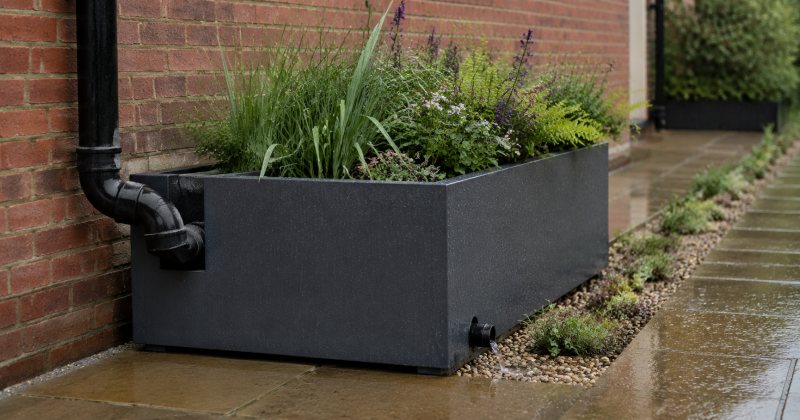
A rainwater planter takes water from a roof downpipe, holds it briefly and releases it more slowly. Plants use some water, while a planned overflow carries the excess. This reduces the sudden rush into a drain during heavy rain.
That idea has clear local relevance. Portsmouth City Council has installed SuDS planters in Drayton and recently backed a wider community scheme. However, a planter does not suit every downpipe. It also cannot fix a blockage, a damaged pipe or a wrong connection.
Before fitting one, confirm where the downpipe leads, where the overflow will go and whether the existing route works. This guide compares planters with water butts, rain gardens and soakaways.
What is a rainwater planter?
A rainwater planter forms part of a sustainable drainage system, often shortened to SuDS. It looks like a raised garden container, but it also manages roof water.
A typical unit has a downpipe inlet, planted upper layer, lower storage zone and controlled overflow. It also needs a level base that can carry the full weight.
Some designs filter water through soil and stone; others use a separate reservoir. Unlike a decorative pot, a SuDS planter accepts roof flow and controls the excess.
Why are rainwater planters relevant in Portsmouth?
Roof water reaches drains quickly where paving, roads and buildings leave little open ground. During heavy rain, many downpipes send water into the network at once.
Portsmouth City Council’s SuDS guidance explains that these systems manage rain close to where it falls. They can store water briefly, slow its route into drains, allow some water to soak away and support plants. The council also installed downpipe-fed SuDS planters in Drayton to reduce the speed at which roof water reached the local sewer.
One planter will not solve local flooding, but it can reduce peak flow from a suitable roof. The council’s 2026 grant has closed, although the method remains useful.
How does a downpipe-fed planter work during rain?
- Rain lands on the roof and runs into the gutter.
- The downpipe or a fitted diverter directs some or all of that flow into the planter.
- The soil, stone and storage zone hold part of the water.
- Plants use some water, while some evaporates or soaks away where the design allows.
- When the planter fills, an overflow sends excess water to an approved outlet.
That final step matters most during prolonged or intense rain. A planter has limited capacity. Once full, it needs a clear overflow route that does not send water towards a wall, doorway, air brick, neighbour’s land or busy path.
Some planters reconnect the overflow to the existing rainwater pipe. Others use a suitable planted area or separate surface-water route. The property and drainage layout control that choice.
Can a rainwater planter help your Portsmouth downpipe?
It may help when a working downpipe sends roof water straight into a drain that would benefit from a slower flow. A planter can also add greenery to a small paved site.
A suitable location usually needs:
- An easy-to-reach rainwater downpipe.
- Enough room for the chosen unit and future upkeep.
- A flat base that will remain stable under the full weight.
- A safe and lawful overflow route.
- Access to clear leaves, silt and plant growth.
- Any permission the property arrangement requires.
However, do not connect a planter simply because a downpipe overflows. The gutter may hold leaves, the downpipe may contain a blockage or the underground rainwater pipe may have failed. Adding storage above a fault may hide the symptom briefly without fixing the cause.
If water already pools across paving, our guide to driveway drainage problems in Portsmouth explains how falls, channels, downpipes and underground pipes can create a wider problem.
What should you check before installing one?
Confirm where the downpipe leads
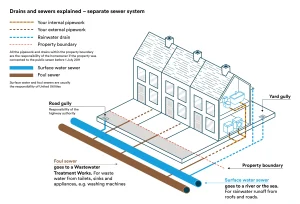
First, establish whether the pipe carries rainwater only. A downpipe may enter a surface-water drain, combined drain, soakaway or short outlet.
Our guide to wrong drain connections in Portsmouth explains why foul water and rainwater routes need careful checking. A planter must never become a way to ignore a misconnection.
Check the gutter and pipe condition
Look for leaking joints, loose brackets, cracks and water escaping around the downpipe shoe. Observe flow only from a safe position. If the route appears blocked, fix that fault before planning a planter.
Match the planter to the roof area
A small unit may fill quickly beneath a large roof. The installer should consider roof area, rainfall, storage and outlet rate rather than choosing by appearance.
Plan for safe overflow
Decide where water will go after the storage fills. The outlet must not create a trip hazard, soak the wall or move the problem elsewhere.
Check the base and access
Water weighs roughly one kilogram per litre, so even a compact unit becomes heavy. Use a firm, level base. Keep drain access, air bricks and utility covers clear.
Rainwater planter, water butt, rain garden or soakaway?
These options manage rain in different ways.
| Option | Main job | Space needed | Key limit |
|---|---|---|---|
| Rainwater planter | Slows downpipe water and supports plants | Small to medium | Needs an overflow and regular care |
| Water butt | Stores water for garden use | Small | Adds little storm capacity when full |
| Rain garden | Holds runoff in a shallow planted area | Medium | Needs suitable levels and soil |
| Soakaway | Stores water below ground | Medium to large | Site and ground control suitability |
A water butt supports reuse but only provides storm storage when space remains inside it. A planter focuses more on short storage, controlled release and planting.
A rain garden needs the right levels and ground. A soakaway may handle a larger roof or paved area when tests show that the soil can take the water. Our Portsmouth soakaway guide explains how underground storage differs from a small planter.
For larger surface-water work, see our soakaway services in Portsmouth. Space, soil, existing drains and nearby structures all affect the choice.
What maintenance does a rainwater planter need?
A planter only works properly while its inlet, storage and overflow remain clear. Check it through the year and after severe weather:
- Remove leaves and litter from the inlet.
- Clear visible silt before it blocks the flow path.
- Make sure the overflow runs freely.
- Replace dead plants with species suited to the wet-and-dry cycle.
- Look for erosion, leaning sides or movement at the base.
- Check that roots have not blocked an outlet.
- Water new plants until they establish.
Some designs hold water below the visible soil. However, foul smells, long-lasting surface water, repeated bypassing or leaks at the base need attention.
When should drainage work come before a planter?
A rainwater planter manages runoff; it does not repair drains. Arrange a drainage check first if:
- The downpipe overflows in light rain.
- Water backs up from a gully when the roof drains.
- Standing water remains close to the building.
- The same rainwater route blocks repeatedly.
- The ground has sunk above the underground pipe.
- Dirty water or foul smells appear near the rainwater outlet.
- You cannot confirm where the downpipe discharges.
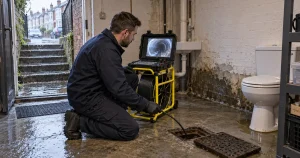
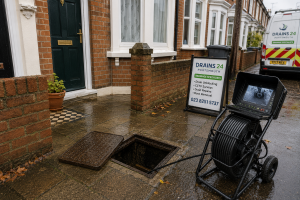
Our article on standing water around Portsmouth drains covers slow surface outlets and wider underground faults. An engineer can check gullies and chambers, trace the likely route and test flow. The result may point to clearing, repair, a corrected connection or a different surface-water system.
Get a Portsmouth rainwater route checked
A well-chosen rainwater planter can slow roof runoff and add useful planting to a small space. However, the downpipe, overflow and existing drain still need to work as one system.
Portsmouth Drains24 can check rainwater pipes, external gullies and accessible underground routes across Portsmouth, Southsea, Fratton, North End, Baffins, Copnor, Drayton and Cosham. If a planter does not suit the site, we can explain the drainage options.
For advice or a booking, call 023 8251 5737. For urgent water backing up or entering the property, call 07511 181 177.
Frequently asked questions
Does a rainwater planter completely disconnect a downpipe from the drain?
Not always. Many systems hold and slow roof water, then return excess water to the existing rainwater route through an overflow. Other designs send overflow to a suitable planted area or surface-water system.
Can a rainwater planter stop flooding?
It can reduce and delay runoff from a suitable roof area, but one planter cannot guarantee flood protection. Its benefit depends on its storage, outlet, maintenance and the condition of the wider drainage system.
Is a rainwater planter the same as a water butt?
No. A water butt mainly stores water for later use. A rainwater planter also supports plants and usually aims to hold, filter and slowly release roof runoff through a planned outlet.
Do rainwater planters need maintenance?
Yes. Owners should clear leaves and silt, keep the inlet and overflow open, care for the plants and check the base after severe weather.
Should I choose a rainwater planter or a soakaway?
Choose according to the roof area, available space, soil, existing drainage and the amount of water you need to manage. A planter may suit a small retrofit, while a soakaway can provide larger underground storage where the ground and site allow it.