Portsmouth drain repairs may be needed when the same drain keeps blocking, backing up or smelling even after it has been cleared. A one-off blockage can happen in any home or business. However, repeated blockages often point to a deeper fault inside the pipework.
In many cases, the drain itself has a problem that keeps catching waste, slowing the flow or letting water sit in the wrong place. That fault may not be obvious from the surface, which is why repeated clearing does not always solve the issue.
Portsmouth Drains24 helps customers across Portsmouth, Southsea, Fratton, Cosham, North End and nearby areas deal with drainage problems properly. If a blockage keeps returning, the next step may involve CCTV inspection, targeted drain repairs, root removal or further maintenance rather than another quick clear.
Why repeated blockages can point to Portsmouth drain repairs
A blocked drain does not always mean the pipe has failed. Grease, wipes, leaves, food waste and everyday debris can all cause a blockage. Once cleared, the drain may return to normal.
However, a drain that blocks again and again deserves closer attention. Something inside the pipe may be catching waste or reducing the space available for water to flow. When this happens, the same section becomes the weak point in the system.
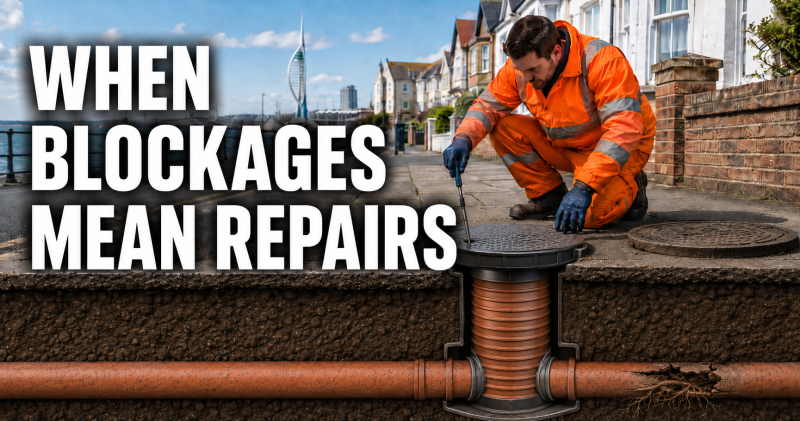
This is where Portsmouth drain repairs may become the right solution. Repair work aims to fix the fault causing the repeat issue, not just clear the waste sitting in front of it.
Signs your drain may need repair, not just unblocking
Some drainage faults show clear warning signs. Others build slowly until the problem becomes urgent. If you notice the same symptoms returning, it is worth arranging a proper check.
Common signs include:
- The same drain blocks more than once.
- Water clears for a short time, then slows again.
- Wastewater backs up through a toilet, sink, bath or outside drain.
- Bad smells return after the drain has been cleared.
- Gurgling sounds continue after using water.
- Wet patches, damp ground or dips appear near the drain run.
- An outside gully overflows during normal use.
- Tree roots keep entering the pipe.
These signs do not always mean major excavation is needed. However, they do suggest the pipework needs proper investigation.
Cracked or displaced joints
Older drains can move over time. Ground movement, heavy traffic, nearby building work, tree roots and general age can all affect underground pipework. When a joint opens or moves out of line, waste can catch on the edge of the pipe.
At first, the drain may only slow down. Later, debris begins to collect in the same place. Eventually, the same section blocks again and again.
A displaced joint can also let soil, stones and roots enter the drain. Once that happens, simple clearing may only give short-term relief.
Root damage inside Portsmouth drains
Tree roots often enter drains through small cracks, open joints or weak seals. They grow towards moisture inside the pipe and form a dense mass that catches waste as it passes.
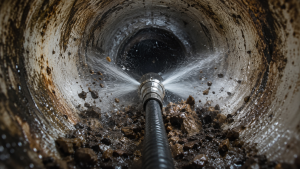
Jetting can clear the immediate blockage. However, the roots may grow back if the entry point remains open. In those cases, root removal may need to be followed by repair work to stop the same problem returning.
Homes with older clay pipework, gardens, mature trees or long drain runs can be more exposed to this type of issue.
Collapsed or partly collapsed drain sections
A full collapse can stop the drain completely, but a partial collapse may create more confusing symptoms. Water may still pass through the pipe, yet waste catches on the damaged section.
This can lead to slow drainage, bad smells, repeated blockages and wet ground above the pipe. A collapse may also worsen if the surrounding soil starts to move into the drain.
Because the pipe sits underground, a CCTV survey is usually the safest way to confirm what has happened before any repair decision is made.
Low sections and standing water
Drains need the right fall so wastewater can flow away. If a section drops, sags or settles, water may sit inside the pipe. Drainage engineers often call this a belly.
Standing water allows silt, grease and waste to collect. Over time, the same section becomes more likely to block. Jetting can clear it temporarily, but the pipe shape still causes the problem to return.
A CCTV survey can show whether water is sitting inside the pipe and where the low section starts.
Pitch fibre and older pipe materials
Some older properties around Portsmouth and nearby areas may have ageing drainage materials. Pitch fibre pipes, old clay drains and earlier repair sections can all become more vulnerable over time.
Pitch fibre may deform, blister or narrow inside. Clay pipes can crack or separate at joints. Older repairs may also create rough edges if the work was not done well.
When the pipe shape changes, waste no longer flows cleanly. This is when repair options such as patch repairs, lining or replacement may need to be considered.
How CCTV surveys help confirm the repair
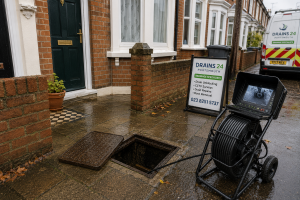
Repeated blockages should not rely on guesswork. A CCTV drain survey allows an engineer to see the inside of the pipe and identify the cause of the problem.
The camera may show cracks, roots, displaced joints, scale, standing water, damaged pipe sections or an obstruction that has not fully cleared. This helps the customer understand whether the drain needs cleaning, repair, root cutting, lining or a different solution.
CCTV evidence also helps avoid unnecessary digging. If the fault is localised, a targeted repair may solve the issue with less disruption than replacing a longer section of pipe.
What repair options may be available?
The right repair depends on the pipe condition, the location of the fault and how severe the damage is. Not every problem needs excavation, but not every fault can be solved by lining either.
Common options include:
- Patch repair for a localised crack or joint defect.
- CIPP lining for suitable longer sections of damaged pipe.
- Excavation where the pipe has collapsed or needs replacement.
- Root cutting followed by repair where roots have entered through a defect.
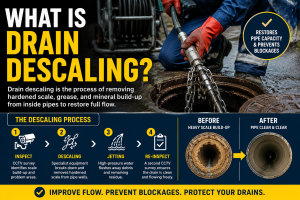
- Descaling or cleaning where build-up has reduced the pipe bore.
For drainage work linked to building layouts, pipe protection or inspection chambers, GOV.UK’s Approved Document H gives useful background on drainage and waste disposal requirements in England. It is especially relevant where repairs connect with manholes, pipe runs, building work or drainage layout changes.
When drain unblocking is still the right answer
Not every blocked drain needs repair. If the blockage came from wipes, grease, leaves, food waste or a one-off obstruction, drain unblocking may be enough.
The key difference is whether the issue returns. If the drain clears and stays clear, repair may not be needed. If the same symptoms come back, the pipe should be checked more carefully.
That is why repeated blockages need a step-by-step approach. Clear the drain first. Then inspect it if the symptoms suggest an underlying fault.
Why repair delays can cost more later
Leaving a damaged drain untreated can make the problem worse. Cracks may widen. Roots may spread. Soil may enter the pipe. A small defect can become a larger collapse if water washes away the surrounding ground.
Delays can also increase the risk of internal flooding, garden damage, bad smells and repeated callouts. For landlords, businesses and busy homes, that disruption can become expensive quickly.
Prompt investigation gives you a clearer choice. You can decide whether the drain only needs clearing, whether a minor repair will help, or whether a more serious fault needs attention.
Portsmouth Drains24 can help find the cause
If a drain keeps blocking, the most important question is why. Clearing the waste solves the immediate problem, but it may not fix the fault that caused it.
Portsmouth Drains24 can help with blocked drains, CCTV drain surveys, root removal and targeted drain repairs across Portsmouth and nearby areas. The aim is to find the cause, explain the options clearly and recommend the right next step for the condition of the pipe.
If the same drain has blocked more than once, it may be time to check whether repair work is needed before the problem becomes more serious.
For drainage work linked to building layouts, pipe protection or inspection chambers, GOV.UK’s Approved Document H gives useful background on drainage and waste disposal requirements in England. It is especially relevant where repairs connect with manholes, pipe runs, building work or drainage layout changes.
FAQs
How do I know if my Portsmouth drain needs repair?
Your drain may need repair if the same blockage keeps returning, bad smells come back, water backs up, or a CCTV survey shows cracks, roots, displaced joints or a collapsed section.
Can repeated blockages be fixed without digging?
Some repeated blockages can be fixed without digging. Patch repairs, lining, root cutting or descaling may help, depending on the pipe condition. A CCTV survey confirms which option is suitable.
Does jetting repair a damaged drain?
No. Jetting clears blockages and debris, but it does not repair cracks, displaced joints, root entry points or collapsed sections. If the pipe is damaged, repair work may still be needed.
Why does my drain block again after it has been cleared?
A drain may block again if waste catches on roots, cracks, scale, a moved joint or a low section holding water. These faults can make the same section block repeatedly.
Should I get a CCTV survey before drain repairs?
Yes, a CCTV survey is usually the best way to confirm the cause before repair work. It helps identify the fault, location and most suitable repair method.