HMO drainage Portsmouth issues are a growing concern for landlords managing shared houses, student accommodation, and converted flats across the city. With multiple occupants using kitchens, bathrooms, and shared waste systems daily, drainage problems can develop much faster than in standard residential properties.
Landlords are generally responsible for maintaining drainage systems in safe working condition. Ignoring recurring drainage problems can lead to property damage, tenant complaints, hygiene concerns, and expensive repairs later.
Understanding how shared drainage systems work helps HMO landlords reduce emergency callouts and keep properties compliant.
Why HMOs Experience More Drainage Problems
HMOs place significantly more pressure on drainage systems compared to standard households.
Higher Usage Levels
Multiple tenants using showers, toilets, sinks, and washing machines every day increases waste flow through the system.
Grease and Food Waste
Shared kitchens often generate more grease, oils, and food debris, which can gradually build up inside drains.
Improper Waste Disposal
Wet wipes, sanitary products, excessive toilet paper, and cooking waste are common causes of HMO drainage blockages.
Older Portsmouth Pipework
Many Portsmouth HMOs are located in older buildings with ageing drainage infrastructure that may already be partially restricted or damaged.
Common HMO Drainage Portsmouth Problems
Several drainage issues regularly affect shared accommodation properties.
Blocked Shared Drains
Communal waste systems can become overloaded quickly when multiple tenants use the same pipework.
See our drain unblocking services.
Slow Drainage
Slow sinks, showers, or toilets often indicate partial blockages developing deeper within the system.
Bad Smells
Persistent drainage odours may signal trapped waste, blocked vents, or damaged pipework.
Overflowing External Gullies
Heavy usage can cause external drains and gullies to back up during busy periods or heavy rainfall.
Drain Damage
Older HMO properties may suffer from cracked drains, root intrusion, collapsed sections, or displaced joints.
What Are HMO Landlords Responsible For?
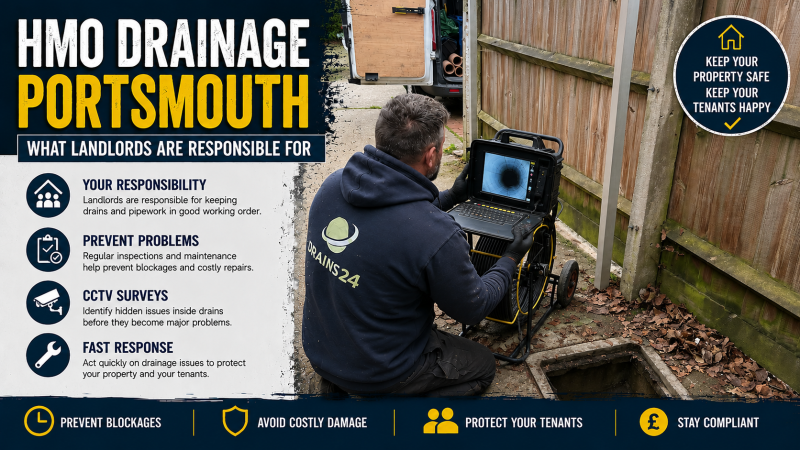
Landlords are normally responsible for maintaining drainage systems serving their property.
Keeping Drains Operational
Drainage systems should remain functional, hygienic, and free-flowing for tenants.
Responding to Drainage Problems
Blocked toilets, overflowing drains, or wastewater backing up require prompt attention.
Emergency issues should never be ignored in shared accommodation.
Learn more about our emergency drainage services.
Arranging Drain Inspections
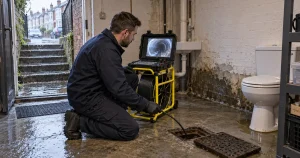
Where problems repeatedly occur, landlords should arrange professional inspections to identify the root cause.
Our CCTV drain surveys help diagnose hidden issues.
Maintaining Shared Pipework
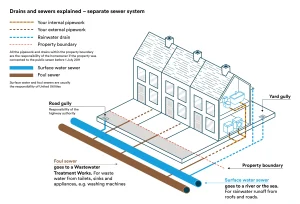
Landlords are typically responsible for communal drainage systems serving multiple tenants.
Preventing Drainage Problems in HMOs
Preventative maintenance helps reduce disruption and emergency costs.
Routine Drain Cleaning
Regular maintenance jetting can help keep shared drains flowing properly.
Tenant Guidance
Simple instructions about what should not go down sinks or toilets can significantly reduce blockages.
CCTV Drain Surveys
Periodic inspections help identify damage before it becomes a major repair issue.
Early Repair Work
Minor drainage defects often become much more expensive if ignored.
See our drain repair services.
Signs Your HMO May Need Professional Drainage Attention
You should arrange professional inspection if tenants report:
- Frequent blockages
- Water backing up
- Slow-draining sinks or showers
- External drain overflows
- Bad smells near drains
- Gurgling pipe noises
- Repeated emergency callouts
These are often signs of developing structural or capacity issues.
Commercial and Student HMOs in Portsmouth
Portsmouth’s student population and dense housing areas create unique drainage pressures.
Areas with older converted properties may experience:
- Shared drain overloading
- Fat and grease build-up
- Pipe scaling
- Root intrusion
- Misconnected drainage
- Poor historic repairs
Proactive drainage maintenance helps landlords avoid larger repair costs and tenant complaints.
Conclusion
HMO drainage Portsmouth systems require regular attention due to the increased pressure placed on shared drainage infrastructure. Landlords are generally responsible for maintaining safe, functional drainage systems and responding quickly when problems arise.
Routine inspections, preventative cleaning, and early repairs can help reduce emergencies, protect tenants, and extend the life of the drainage system.
FAQs
Are landlords responsible for blocked drains in HMOs?
In most cases, landlords are responsible for maintaining communal drainage systems and resolving drainage problems affecting shared accommodation.
Why do HMOs get more blocked drains?
HMOs usually experience heavier drainage usage because multiple tenants use the same kitchens, bathrooms, and waste systems daily.
Can CCTV surveys help HMO landlords?
Yes, CCTV drain surveys help identify hidden damage, blockages, root intrusion, and structural problems inside drainage systems.
How can landlords prevent HMO drainage problems?
Regular maintenance, tenant guidance, routine inspections, and professional drain cleaning all help reduce drainage issues.
What should landlords do if drains keep blocking?
Recurring blockages should be professionally investigated to identify underlying structural or maintenance problems.