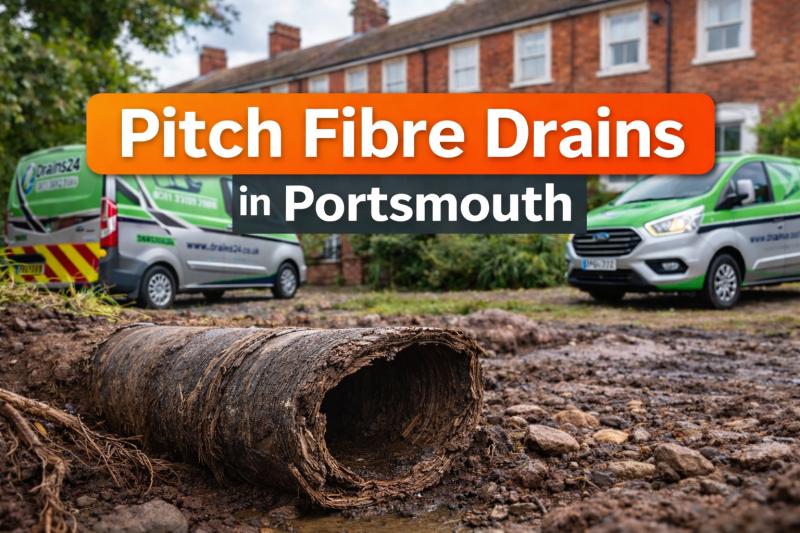
Pitch fibre drains in Portsmouth are still found in many older residential properties, particularly where drainage systems were installed or replaced several decades ago. Over time, this pipe material degrades internally, leading to deformation, cracking, and flow restriction.
At Drains24, pitch fibre drains in Portsmouth are frequently identified during inspections where recurring drainage problems persist despite repeated clearing attempts.
How pitch fibre drains fail over time
Pitch fibre pipes were originally manufactured using wood cellulose fibres bonded with bitumen. While lightweight and easy to install, the material softens as it ages.
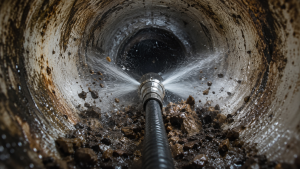
As the pipe walls weaken, they can blister, flatten, or collapse inward. These changes reduce internal diameter and disrupt flow, even when the drain appears clear from the surface.
Why pitch fibre drains in Portsmouth cause recurring issues
In many Portsmouth properties, pitch fibre drainage was installed beneath hardstanding or extensions, making early signs of failure difficult to detect.
When deformation occurs, waste catches along softened pipe walls. Clearing restores temporary flow but does not reverse structural deterioration, meaning problems often return within weeks or months.
What drain inspections commonly reveal
A CCTV drain inspection is the most reliable way to confirm whether pitch fibre pipes are present and assess their condition.
Inspections often reveal:
- Oval or flattened pipe profiles
- Internal blistering and surface breakdown
- Localised collapses restricting flow
- Connections affected by ground movement
In some cases, inspections also identify older drainage components such as a buchan trap contributing to restricted flow.
Pitch fibre drains and pest access
Degraded pipework can allow gaps to form at joints or collapse points. This can create entry routes for pests, which is why some homeowners only discover pipe failure after requesting a drain survey for rats.
Structural defects rather than blockages are often the underlying cause in these situations.
Repair options for pitch fibre drainage
Once deterioration is confirmed, repair options depend on pipe condition and location. Some sections may be suitable for lining, while others require targeted replacement.
Drains24 drainage specialists assess whether repair or replacement is the safest long-term solution before work begins.
For severe failures, drain repairs in Portsmouth may be required to prevent further collapse.
Why early diagnosis matters
Pitch fibre drains rarely fail suddenly. Instead, gradual deformation causes ongoing disruption until the pipe can no longer function properly.
Identifying pitch fibre drains in Portsmouth early reduces repair costs, limits disruption, and prevents avoidable structural damage.
UK guidance on drainage standards and pipe condition is outlined in Building Regulations Part H, which covers sanitation and drainage requirements.
Summary
Pitch fibre drains in Portsmouth present hidden risks in older properties. Although issues may initially appear minor, ongoing material degradation leads to recurring problems that clearing alone cannot resolve. Professional inspection remains the most effective way to diagnose and manage these systems safely.
FAQs
What are pitch fibre drains?
Pitch fibre drains are pipes made from wood cellulose fibres bonded with bitumen, commonly installed in properties from the mid-20th century.
Why do pitch fibre drains fail over time?
The material softens as it ages, causing deformation, blistering, and eventual collapse that restricts flow.
How can I tell if my property has pitch fibre drains?
A CCTV drain inspection is the most reliable way to identify pipe material and assess its condition.
Can pitch fibre drains cause pest problems?
Yes. Structural defects in degraded pipes can create access points for rodents, often discovered during drain surveys.
Should pitch fibre drains be repaired or replaced?
This depends on the extent of deterioration. Minor defects may be lined, while severe collapse usually requires replacement.