Many homes in Portsmouth, especially older terraced properties in areas like Fratton, Southsea, Copnor, Baffins and North End, share drainage systems.
These shared lines were originally designed for multiple households to discharge wastewater into the same underground pipe. While they worked well decades ago, today they are one of the biggest causes of repeated drain blockages across the city.
This guide explains why shared drains cause so many issues, the warning signs to look out for and the best ways to prevent ongoing problems.
What Are Shared Drains?
A shared drain (also called a shared lateral or shared gully) is a drainage system where two or more properties feed into the same underground pipe before it connects to the main sewer.
In Portsmouth’s older terraced streets, it’s extremely common for several homes to share:
- Wastewater pipes
- Rainwater inlets
- Access chambers
- Shared gully traps
This setup means one home’s drainage behaviour can affect neighbours’ systems — a major cause of disputes and recurring issues.
Why Portsmouth Has So Many Shared Drains
1. Dense Terraced Housing Construction
Large parts of Portsmouth were rapidly built between the late 1800s and 1950s. Shared drainage was standard because it was cheaper and simpler.
2. Limited Underground Space
Portsmouth is one of the most densely populated cities in the UK, with very little spare land. Early builders often combined drainage to fit infrastructure into narrow roads and alleyways.
3. Historic Combined Sewer Systems
Many areas originally used combined drains for rainwater and wastewater — increasing the chance of overload or misuse.
4. Ageing Drainage Networks
Shared pipes that have served 3–6 houses for over 70+ years often develop structural problems or heavy wear.
Why Shared Drains Block Repeatedly
1. Misuse by One Household Affects Everyone
If one home flushes wipes, grease, sanitary items or food waste, the entire shared pipe can block.
2. Silt & Debris Build-Up from Multiple Sources
Rainwater gullies shared between properties collect leaves, mud and grit faster.
3. Narrow Underground Sections
Old clay and concrete pipes were built smaller than modern systems, making them prone to blockage.
4. Structural Damage Accumulates Faster
Cracks, displaced joints or root intrusion affect every connected household.
5. No One Takes Responsibility
Many homeowners do not realise their drains are shared, so essential maintenance gets ignored.
6. Washing Machines & Dishwashers Overload Old Lines
Modern appliances discharge large volumes of water which shared drains were never designed for.
Common Symptoms in Portsmouth Terraces
- Water backing up into sinks or baths
- Shared gully overflowing
- Drains blocking repeatedly
- Bad smells travelling between houses
- Gurgling when neighbours use their plumbing
- Toilet water rising or bubbling
- Slow drainage during peak usage times
If several homes experience symptoms at the same time, a shared system is almost certainly involved.
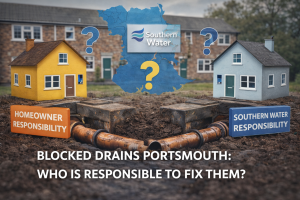
Who Is Responsible for Shared Drains in Portsmouth?
After 2011 — Southern Water responsibility
Most shared drains that serve multiple homes outside the property boundary are owned and maintained by Southern Water.
Inside boundaries
If the shared pipe sits within private plots before joining the public lateral, homeowners may share responsibility.
A CCTV survey is usually needed to determine exact ownership.
How Professionals Diagnose Shared Drain Problems
1. CCTV Drain Survey
This identifies the exact source of the blockage and maps shared pipe routes.
2. Sonar Tracing
Used to determine which properties connect to the same run.
3. High-Pressure Jetting
Clears full-length shared lines without excavation.
4. Root Cutting
Common in older Southsea and North End gardens.
Long-Term Solutions to Stop Repeated Blockages
1. Relining the Shared Section
A full CIPP liner creates a new pipe inside the old one, reinforcing the structure.
2. Repairing Displaced Joints
Many shared clay pipes suffer from misaligned joints that catch debris.
3. Installing Backwater Valves
Prevents wastewater from one home backing up into another.
4. Educating All Households
Clear agreements about what can and cannot be flushed make a big difference.
5. Periodic Jetting & Maintenance
Shared drains need more frequent cleaning due to increased usage.
Preventing Shared Drain Problems
- Never flush wipes or sanitary products
- Avoid tipping fat, oil or food scraps down the sink
- Keep outside gully grates clear
- Report recurring issues to Southern Water
- Arrange joint maintenance between neighbours
- Book CCTV inspections every few years
Local Insight for Portsmouth Homeowners
Portsmouth has some of the oldest, densest terraced housing in Hampshire.
As a result, shared drains are incredibly common but rarely understood by homeowners. A single misuse or structural defect can affect an entire row of houses.
Identifying that a shared system is present — and treating it accordingly — is the first step in preventing repeated blockages.
FAQ — Shared Drains in Portsmouth
Q1: How do I know if my home has shared drains?
A CCTV survey will map the connections and confirm whether neighbouring homes use the same system.
Q2: Can my neighbour’s actions block my drains?
Yes. Shared drains mean waste from multiple homes flows through the same pipe.
Q3: Who is responsible for fixing shared drain issues?
If the shared line is outside property boundaries, Southern Water typically maintains it.
Q4: Do shared drains block more often than private drains?
Yes — more households mean more waste, greater wear and faster build-up.
Q5: How can I stop shared drain problems?
Avoid flushing wipes, use strainers, maintain gullies and book surveys when issues repeat.